The Good, the Bad, and the Ugly: Representations of the "Bad Poor" in Dorothy Allison and The Wild Wonderful Whites of West Virginia as Post-Anarchosyndicalist Subversion; or, Academia as Scatological Derivative in the Suburban Lava Lamp of Capitalism

This academic one is more fun. My partner at the time called me an asshat when I sent it to her to edit, but I don't think she made it to the end to get the joke. I am not fit for academia.
The Good, the Bad, and the Ugly
Representations of the “Bad Poor” in the Works of Dorothy Allison and The Wild and Wonderful Whites of West Virginia as Successful Post-Anarchosyndicalist Subversion of Spectacle; or, Academia as Scatological Derivative in the Suburban Lava Lamp of Capitalism1
Sergio Leone noted of his film The Good, the Bad, and the Ugly its “theme of emphasis on violence and the deconstruction of Old West romanticism” (The Good, the Bad, and the Ugly). Nodding to the traditional conflation of Western/cowboy imagery2 with the Appalachian hillbilly, I argue the short stories of Dorothy Allison and Julien Nitzberg’s documentary The Wild and Wonderful Whites of West Virginia act as a deconstruction of the romanticization of the Appalachian/hillbilly lower class as “the good poor” (Allison vii). Unlike the work of Leone, however, these texts actively combat co-optation, resisting both interception by what Guy Debord defines as the Spectacle and commodified recuperation into the mainstream. They interpellate the interpellation:3 acting as exceptional examples of American exceptionalism, they are the negative spaces of America, made concrete in their abstraction. Simultaneously derivatives of and superconsummations of the cancer of capitalism, they are the cancers of a cancer gone rogue to ultimately attempt to swallow the apparatus that born(e) them. In contrast to the capitalist mode of thinking which is predicated on scarcity and thus implied finity, the working-class queerness and fatalism embodied in the work of Dorothy Allison and the Whites-as-text act as a sort of interpenetrative Indra’s net of infinity; and combined with their pervasive fatalism and economic/sexual outsider-ness make them more dangerous, visceral threats to a system that requires reifying the abstract into concrete discretes in order to exert power, define, bind, and then trade them.
In trying to write about Dorothy Allison, I wracked4 my self and brain trying to excavate a concrete Statement that Allison was trying to make through her work. It then dawned on me that is the point — for the reader to wrack their self, the same way the narrators of her stories wrack their selves. For the reader to be unable to locate a stable, concrete sense of who Dorothy Allison is and what her point is in a neatly summed-up way. Allison’s writing is a recursive process of coming back to this idea of identifying ideas and trying to locate the self within that, but ultimately finding it to be as evasive as a particle viewed with Heisenbergian uncertainty. “Dorothy Allison” herself is a concept which I use here to denote the collapsing of the author with her narrators. Though I agree with Barthes’ notion that the author is dead, Allison herself has stated the process of her writing is a process of excavating her past in an alchemical reckoning; therefore there is Dorothy Allison the writer and there is Dorothy Allison as she exists through-and-in the process of writing, her narrators acting as the visible, vestigial manifestations of her, like footprints in the sand (which is to say, empty in themselves but making visible a larger movement by way of discrete impressions).
I could not arrest, in the philosophical sense, Allison’s self within her work; this is, of course, the point.5 Allison herself cannot locate herself within the structure of intersecting themes in her work—which is the answer itself. The very act of her writing is a sort of meta-process of coming to such a conclusion. Indeed, to think there is a Statement to be made in any other way than exactly the words-as-process have been written would be to undervalue her work; if such a direct Statement was to be made, it would be made as such. The writing as a whole in itself is the statement, because the writing is her process of reckoning made visible.
Nested within this process is a reflection of that process via the nature of symbolism in her work. Most texts in Western literature act as a sort of code to be deciphered almost mechanistically, with certain words standing in for certain ideas directly, in a distinct, discrete way. Extract this symbol from here, that symbol from there, and when the two interact in a scene, it’s like figuring out a math equation.6 However, with Allison, it is very much a queering of literary technique beyond reductionist identity politics: it is a queering in the broader sense of questioning the foundations/limits/binaries of identity and substance. Her employed allusions and metaphors are not distinct objects with distinct boundaries.7
Allison primarily uses physical regions on the body: necks, thighs, cunts. The symbolism she uses instead is rooted in regions vaguely defined. They are also metonymic and synecdochical, standing in and for the working class: sweat (both of sex and of labor, though curiously never the former as the latter), denim. Equally amorphous are her deployment of feelings: hunger, terror, guilt, shame, desire, consuming/consumed. This latter idea of consuming/being consumed itself represents this very idea of lack of definitional boundaries (hence the theme of food and sex and their entwinement throughout Allison’s work). What is inside and what is out? Where is the boundary of my body? At what point in consumption does something go from the inside to the outside? Where do I end and you begin? Allison paints meaning with ideas, notions, broad swathes that intersect and create a new color at that intersection but with no distinct boundary to outline them. A literary lesbian plaid, rather than a discrete line drawing. This broad-stroke way of painting with concepts is Allison’s way of painting a self situated within intersecting systems of oppression (and therefore identity, as identity is a splitting-off byproduct of oppression): “I do not have fantasies. Fantasy opens me up; I become the fantasy. … I am myself the mystery. The me that will be waits for me. If I cannot dream myself new, how will I find my true self?” (139).
This “true self” is at the intersection of two opposing ideas, an impressionistic werewolf: that of the ignorant hillbilly (the “bad poor”) and the politically aware writer/feminist; the experience of both “terror and lust for my own kind” (3); rock-n-roll on Saturday and gospel on Sunday (“Gospel Song”); a lesbian that finds a gay man attractive (“Violence Against Women Begins at Home”); a lesbian that enjoys penetrative sex (!). Not only is she not situating herself as the bad poor in-opposition-to “the good poor” but her very existence explodes the binary entirely. For the bad poor to exist, there must be a good poor from which they are mirrored; instead, Allison is something else entirely, for the good poor are merely a phantasm of the bourgeoisie collective unconscious, a simulacrum created to concretize a hall-of-mirrors identity that upholds dominant systems of economic oppression. Similarly, her identity as a lesbian that enjoys penetrative sex represents very carnally Allison’s reconciliation of opposites. She is not a Good Lesbian like Bobby or those in her hypocritical feminist collective that uphold the same gender binaries and Madonna/whore shame complexes they purportedly rail against by not being railed by any pseudophalluses.8 Allison and her narrators’ exploration of BDSM and rough, penetrative sex is a radical political act.9 What could be more subversive than a self-identified femme penetrating binaries and fucking the world?10
As the body is for Allison the site at which she negotiates power (in truth, apprehends) and transgresses boundaries that uphold systems of oppression, so too is such for the White family as depicted in Julien Nitzberg’s documentary. Given the lack of capital (material or historical legacy of) to fuel upward mobility in society, bodies of the lower-class are often the only thing by which one can assume power in society. The bodies of the Whites are reclaimed from dominant oppressive apparatuses by their selves, both in their ideological identification with the hillbilly as well as their more carnal uses of it in sex, drugs, and violence. I argue here that the lives of the White family themselves can be read as an authored text, as much as they resist apprehension (philosopho-conceptually and carcerally). They are subversive artists whether they are aware of it or not; the value and interpretation of their lives as a text, of course, being separate from the authors’ à la Barthes’ claim (once again) that “the author is dead” (“The Death of the Author”).
The Whites’ use of sex, drugs and violence is reclaimed and used against the state apparatus that wrought those conditions upon it: instead of reproducing an average of 2.5 more human units of labor for the capitalist machine, they reproduce—in higher than average numbers—more human units to game the welfare system, siphoning money from the government. They hustle drugs on the side, earning untaxable cash:11 as one lawyer in the documentary says, they always have money but where does it come from? It comes from outside the typical structures. And Brandon Poe’s shoot-out with the police is an example of violence—a facet of hillbilly identity born of the Second Amendment foundational to American individualist “freedom” ideology—being literally used against itself.
The Whites have effectively exploited the exploitation of themselves—not only the specific exploitation of them in media and music, but the pervasive exploitation wrought by the apparatus of the state on them both specifically as the White family as perceived by local community and government as well as the kind of common exploitation of the general poor that takes place. It is almost as if capitalism is playing the game against itself, a sort of meta-capitalism.
Guy Debord describes “official culture as a ‘rigged game,’ where conservative powers forbid subversive ideas to have direct access to the public discourse. Such ideas get first trivialized and sterilized, and then they are safely incorporated back within mainstream society, where they can be exploited to add new flavors to old dominant ideas” (“Spectacle (Critical Theory)”) and it is this “rigged game” that the Whites have themselves in turn rigged by their so-called “deviant” behavior.
Acting as an unintentional too-perfect symbol of “official culture,” MTV tried to appropriate (a philosopho-conceptual apprehension/arrest) the White family and, like a fist trying to grab hold of slime, they leaked out, uncontainable by the spectacle’s attempt at recuperation (as defined by Situationists). Similar to Allison’s queer post-anarchist “decisive will to not be governed” (“Post-Anarchism”) via evasion of definitional boundaries and thus recuperation, so too are the lives of the Whites queer: they evade being corralled into the traditional confines of society, especially economically but also in the sense that they are “too much.” In Jesco White’s case, he physically uses his trailer as a wall between himself and society so that he can continue to live by the rules of his world and not “their world” (Nitzberg).
There is an ouroboros capitalism going on,12 a kind of capitalist cannibalism that folds into and over itself like the kneaded dough in an Allison story, in terms of the relationship of the Whites to advanced capitalism and its power dynamics (like Allison’s relationship to gender and its power dynamics). On the one hand, they seem to be a grotesque embodiment of late-stage capitalism: eating fast food, insatiable consumers of things (as seen by the amount of stuff in their houses), consumers of a commodified Confederacy, reinforcing hillbilly stereotypes (though simultaneously finding power in their identification with it). They are a product of the “social dysfunction and degradation of everyday life that [advanced capitalism’s apparent success] simultaneously inflicted” (“Spectacle (Critical Theory)”), but that product has come back to bite and undermine the hand that created it through their subversions via sex, drugs and violence.
The multitudinous ways the state exerts Foucauldian biopower on working-class Appalachian bodies and the various ways it then manifests (i.e. the “fuck it I’m going to hell anyway” attitude of the Whites or the “violence and death is so pervasive it’s inevitable in my family” attitude of Dorothy Allison) contributes to their queerness and ability to evade apprehension and recuperation and even come out with some modicum of control. This fatalism is mirrored in the Frankfurt School of critical philosophy by the “‘pessimism’ of [Horkheimer and Adorno’s] new critical theory over the possibility of human emancipation and freedom” due to “[t]he dialectic through which Marx predicted the emancipation of modern society [being] suppressed, effectively being subjugated to a positivist rationality of domination” (“Frankfurt School”).13 In some ways, Horkheimer and Adorno have articulated the philosophical underpinnings of the Whites’ paradigm; however, because the Whites and other Appalachian hillbillies, such as Allison and those in her stories, exist within a physical reality that white academics do not, their lives are very materially impacted every day by the exploitation of the state. Hence they are driven so deep into their pessimistic fatalism that it has become something new and dangerous, quite literally, like water so hot it feels cold. In this way, the hillbillies have succeeded where academics have failed, and have become a danger to the dominant government-industrial complex and social order upon which that is founded, not just ideologically but physically taking back what was taken from them.
In today’s world, social media and reality TV have created the illusion of freedom of speech and self that in actuality just reinforce the capitalist individualistic bootstraps14 ideology: what Walter Benjamin would call an aestheticization of politics, a key component of Fascism in which the masses are allowed to express themselves “without affecting the property structure which the masses strive to eliminate” (Benjamin). Radical ideologies and notions of revolution that might precipitate true social change are if not squashed then recuperated, sanitized, and fed back to the populace in the form of Che Guevara t-shirts as a means of control. There is an inherent affinity of the Appalachian working class to the principles of anarcho-syndicalist ideology, e.g. solidarity (as demonstrated through family relationships and identification with each other), direct action (action taken against the state without intervention by bureaucrats or politicians) and workers’ (or hustlers’) self-management. Going a step further than the traditional associations of anarchism, “including essentialism, a ‘positive’ human nature, and the concept of revolution” (“Saul Newman”), the Whites and Allison embody a kind of post-anarchism which “is associated with autonomous modes of thinking and acting — Foucault’s ‘decisive will to not be governed’ — and the renunciation of revolution” (“Post-Anarchism”).
This is aided by their queerness15 thus no locus by which their identity can be pinned down and traded. While their bodies may be subjugated to the powers of the ideological state apparatuses, by the very nature of this queer identity that part of them allows them to supersede the physical biopower and exert a more ideological power over the ideology which then becomes a real biopower for them. Combined with their pervasive fatalism and economic/sexual outsider-ness, they are dangerous, visceral threats to a system that requires reifying the abstract into concrete discretes in order to define, bound, (read: exert power) and then trade them. More valuable to resisting modern Fascism than any armchair postulations by academicians, certainly. And when you objectively look at that violent game, nobody wins—there is no hidden Wizard of Oz behind the curtain, gaining it all; everyone loses in the end. It is ultimately an egregore that is created with no other purpose than to feed itself, to maintain itself in the face of the overwhelming vastness of infinity and nothingness in the universe. Academia, too, has become such an egregore, or rather more like a globule of waxy goop pinched off like scatological excrement within the cheap suburban lava lamp that is the very system it criticizes. Acting as a masturbatory capitalism itself (which feeds the larger apparatus), armchair philosophers just use the other hand and call it a “critique.” Working-class queer hillbillies are outside of this and more of a threat to actually abolish the oppressive definitional boundaries, rather than verbally and abstractly enchain and truncate the world into infinitesimal categorizations like academia. The revolution will be naughty pooping pigs.
Notes16
The length of this title is intended to be ironic, because of the subject matter and my love/hate for academia and the way in which I will now proceed to talk about low brow culture in a very high brow way whilst simultaneously chiding high brow academia.* ↩︎
*Ironic, too, are these footnotes; they are intended as a way of paralleling my act of writing to the themes I explore here, i.e. queering boundaries and making fun of academia, visual footnotes acting to physically and visually exist outside the main body of my text, as well as to act as conceptual tendrils to lead you abstractly outside of my text non-linearly to oppose the hegemony of the arborescent academic essay (much like A Thousand Plateaus: Capitalism and Schizophrenia was an exercise in rhizomatic philosophy for Deleuze and Guattari). Or is it an excuse for poor writing? Only God can judge me.** ↩︎
- **This is also intended to further echo themes found in the Wild Wonderful Whites: itself a joke underneath which is layered meaning, the question of whether the Whites too are an excuse for poor living or are they as brilliant as that sentence is, religious themes of judgment and redemption, etc. ↩︎
One such unintended parallel being the West’s history of “manifest destiny”; herein I argue for Allison and the Whites as an apotheosis of the inevitable manifest destiny of exploitative capitalism. ↩︎
“Althusser goes further to argue that ‘all ideology hails or interpellates concrete individuals as concrete subjects’ and emphasizes that ‘ideology “acts” or “functions” in such a way that it … “transforms” the individual into subjects.’ This is made possible through Althusser’s notion of interpellation or hailing which is a non-specific and unconscious process. For example, when a police officer shouts (or hails) ‘Hey, you there!’ and an individual turns around and so-to-speak ‘answers’ the call, he becomes a subject. Althusser argues that this is because the individual has realized that the hailing was addressed at him which makes him subjective to the ideology of democracy and law. Consequently, individual subjects are presented principally as produced by social forces, rather than acting as powerful independent agents with self-produced identities.” (“Interpellation (Philosophy)”) ↩︎
Wrack: variant spelling of rack. Rack: a framework, typically with rails, bars, hooks, or pegs, for holding or storing things, “a spice rack” (see: Hegemonic Categorization and Order in Capitalism and Academia); an instrument of torture consisting of a frame on which the victim was stretched by turning rollers to which the wrists and ankles were tied; a woman’s breasts (see: synecdoche for Sapphic reification); a set of antlers (see: the walls of the White’s homes); a bed (see: the citadel of Bobby’s bedroom) (“Rack”). ↩︎
The farce being there is no point but rather points as in those that constitute a line. ↩︎
E.g. Shakespearean blue (sorrow) + red (love) = purple (the sorrow of love). ↩︎
The only distinct boundaried metaphor I could find was in the story “Her Thighs”: “the citadel of [Bobby’s] bedroom” (122). Aptly enough, the object of the boundaried metaphor is that which enforces boundaries, is made up of protected walls. As such, she also uses it to represent the walled-off area of the psyche of anti-porn feminists—something Allison, like the narrator of that story, is always transgressing, penetrating like the taboo sex she desires: and thus the symbol itself is a discrete object one can point to, precisely because it is discrete objects Allison transgresses, penetrates. ↩︎
Dildos. ↩︎
Indulge me while I follow debasement and defilement as a thematic rhizome which will circle back on itself when we get to the Whites: while Allison is on the one hand trying to construct herself—a projective sense of searching—there is an undercurrent of debasement and defilement that runs throughout her work. Destruction-as-redemption? An abnegation* of self, a divine feminine chaos to oppose the masculine projective “construct” of self. ↩︎
*The tiny Freud in my brain wanted at first to use the word “abjugate” rather than “abnegate”: “To unyoke;** set free; uncouple” (“Abjugate”). In the definition is perhaps the answer: abnegation as a form of abjugation? ↩︎
- **“Unyoke” as in working animals; “working animals” the tool of poor Southerners, beasts of burden (Southerners themselves in subservience to capitalist exploitation), “working” as in working-class, “animals” as in what the narrators of Allison’s stories compare themselves to; “uncouple” connoting binaries, the sense of untangling attached things; “set free” being Allison’s ultimate goal? To be set free of the past, of the present systems of oppression with their walls that hem one into static identity, of the future and its static notion of who we are supposed to become (circularly, because of the past)? ↩︎
Ponder that paradox and how it reflects top/bottom power dynamics. ↩︎
I do not pretend to ignore the fact that many are addicted to drugs; however, I do not see this as a moral failing but rather a byproduct of capitalism. To focus on their addictions would be to Other them in a way that ignores the sometimes more silent, socially acceptable-yet-insidious forms of addiction that affect nearly everyone in a capitalist society: shopping addictions, workaholics, eating tires, using baby wipes, swallowing Vapo Rub, being in love with inflatables, or any other numerous afflictions that can be seen on such shows as TLC’s My Strange Addiction. The difference with the Whites is that their addiction exists in a loop outside of the capitalist system. ↩︎
What comes to mind is the image of the “naughty pooping pig” and other animal keychains that appear to defecate when you squeeze them. ↩︎
Marx’s dialectic predicting emancipation of modern society summed up as being undercut by the state intervention in the economy as demonstrated by the “socialism for the rich, capitalism for the poor” state-sponsored bailouts (see: the PPP coronavirus loans for the most recent example) that have proliferated in recent years. Which are further evidence as to why Democrats and moderate liberal politics are more damaging to society than extreme right wing politics, and post-structural anarchism is the answer. ↩︎
A corrupted colloquialism, because of course one cannot actually pull oneself up by one’s bootstraps. ↩︎
A fraught term. ↩︎
I argue there is much value in the vulgar debasement and defilement of academia as exemplified here. See also: extensive citing of Wikipedia, a vulgar debasement of this paper yet valuable in its questioning of academic authority and production of knowledge. ↩︎
Works Cited
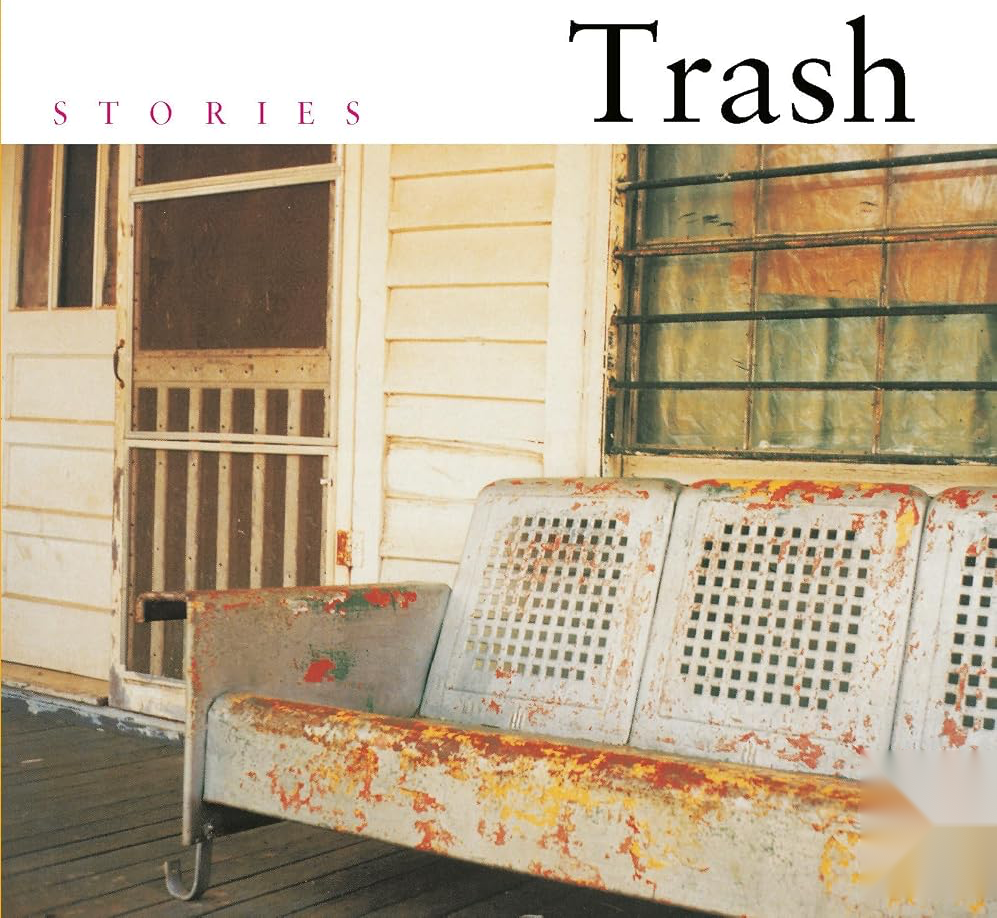
Allison, Dorothy. Trash: Stories. Plume, 2002.
Benjamin, Walter. “The Work of Art in the Age of Mechanical Reproduction.” Walter Benjamin Reference Archive, marxists.org/reference/subject/philosophy/works/ge/benjamin.htm.
“The Death of the Author.” Wikipedia, Wikimedia Foundation, 28 June 2020, en.wikipedia.org/wiki/The_Death_of_the_Author.
“Frankfurt School.” Wikipedia, Wikimedia Foundation, 4 July 2020, en.wikipedia.org/wiki/Frankfurt_School.
The Good, the Bad and the Ugly. Wikipedia, Wikimedia Foundation, 8 July 2020, en.wikipedia.org/wiki/The_Good,_the_Bad_and_the_Ugly.
“Interpellation (Philosophy).” Wikipedia, Wikimedia Foundation, 14 Nov. 2019, en.wikipedia.org/wiki/Interpellation_(philosophy).
Nitzberg, Julien, director. The Wild and Wonderful Whites of West Virginia. Dickhouse Productions / MTV Studios, 2010.
“Post-Anarchism.” Wikipedia, Wikimedia Foundation, 30 May 2020, en.wikipedia.org/wiki/Post-anarchism.
“Rack.” Dictionary.com, Dictionary.com, www.dictionary.com/browse/rack.
“Saul Newman.” Wikipedia, Wikimedia Foundation, 1 July 2020, en.wikipedia.org/wiki/Saul_Newman.
“Spectacle (Critical Theory).” Wikipedia, Wikimedia Foundation, 6 Apr. 2020, en.wikipedia.org/wiki/Spectacle_(critical_theory).